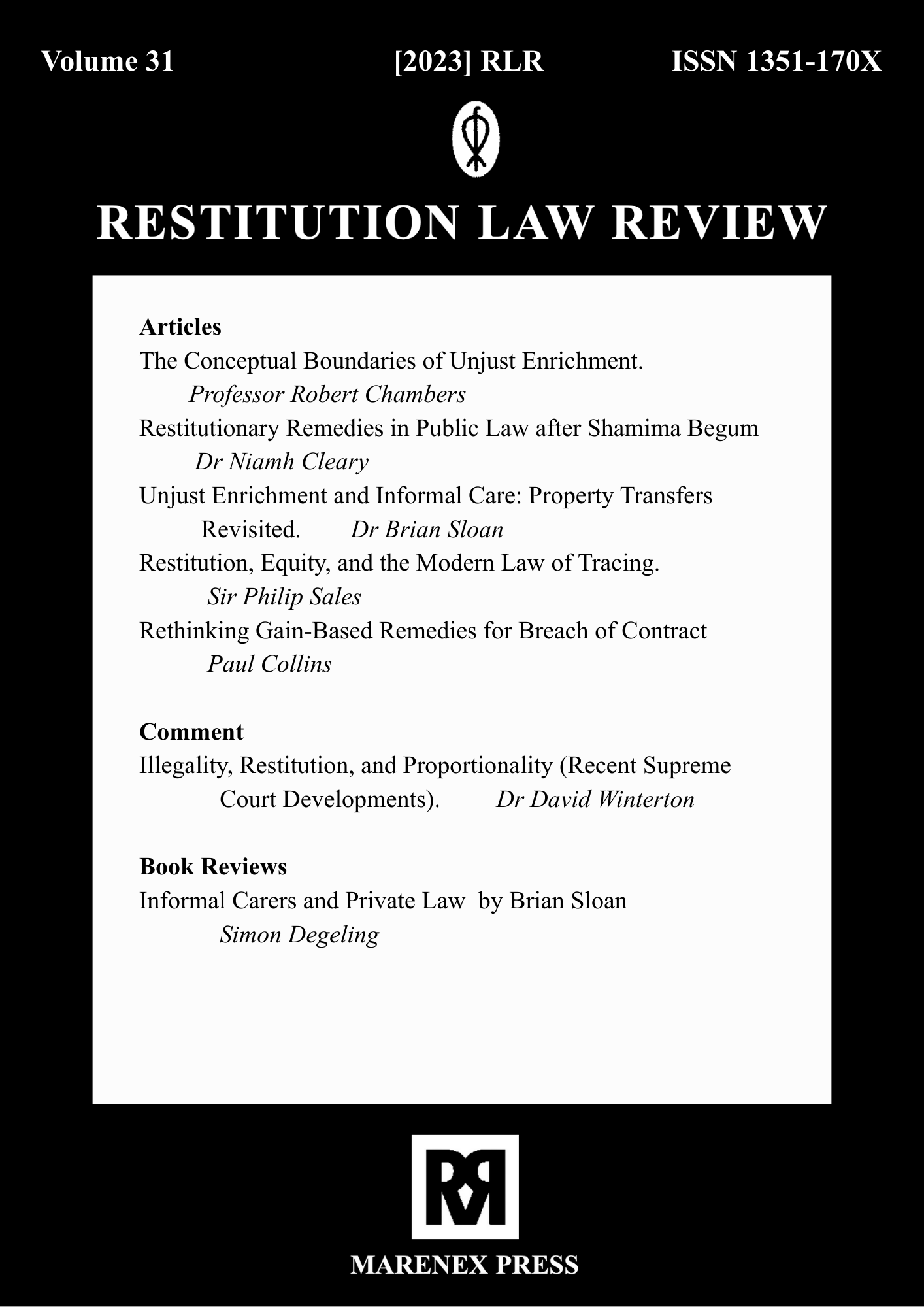
Restitution, Equity, and the Modern Law of Tracing
Abstract
Tracing remains one of the most technically complex and conceptually contested areas within restitution and equity. This article offers a contemporary re-examination of tracing principles in light of recent judicial developments and evolving commercial practices. It explores the relationship between tracing as an evidential process and tracing as a substantive remedy, addressing ongoing debates concerning its equitable and common law foundations. The article analyses the role of proprietary claims, constructive trusts, and equitable liens in restitutionary tracing, with particular attention to insolvency scenarios and mixed funds. It evaluates whether existing doctrines adequately respond to modern financial instruments, electronic transactions, and sophisticated asset structures. The article also considers the extent to which equitable discretion should influence tracing outcomes, especially where competing claimants and innocent third parties are involved. By drawing on comparative perspectives and recent appellate authority, the article argues for a principled yet pragmatic approach that preserves the integrity of tracing while ensuring its adaptability. The analysis highlights the continuing importance of tracing as a bridge between restitution and property law, and it offers guidance on how courts can maintain coherence in this challenging and evolving area.
Published
Issue
Section
License
Copyright (c) 2023 Restitution Law Review

This work is licensed under a Creative Commons Attribution-NonCommercial 4.0 International License.