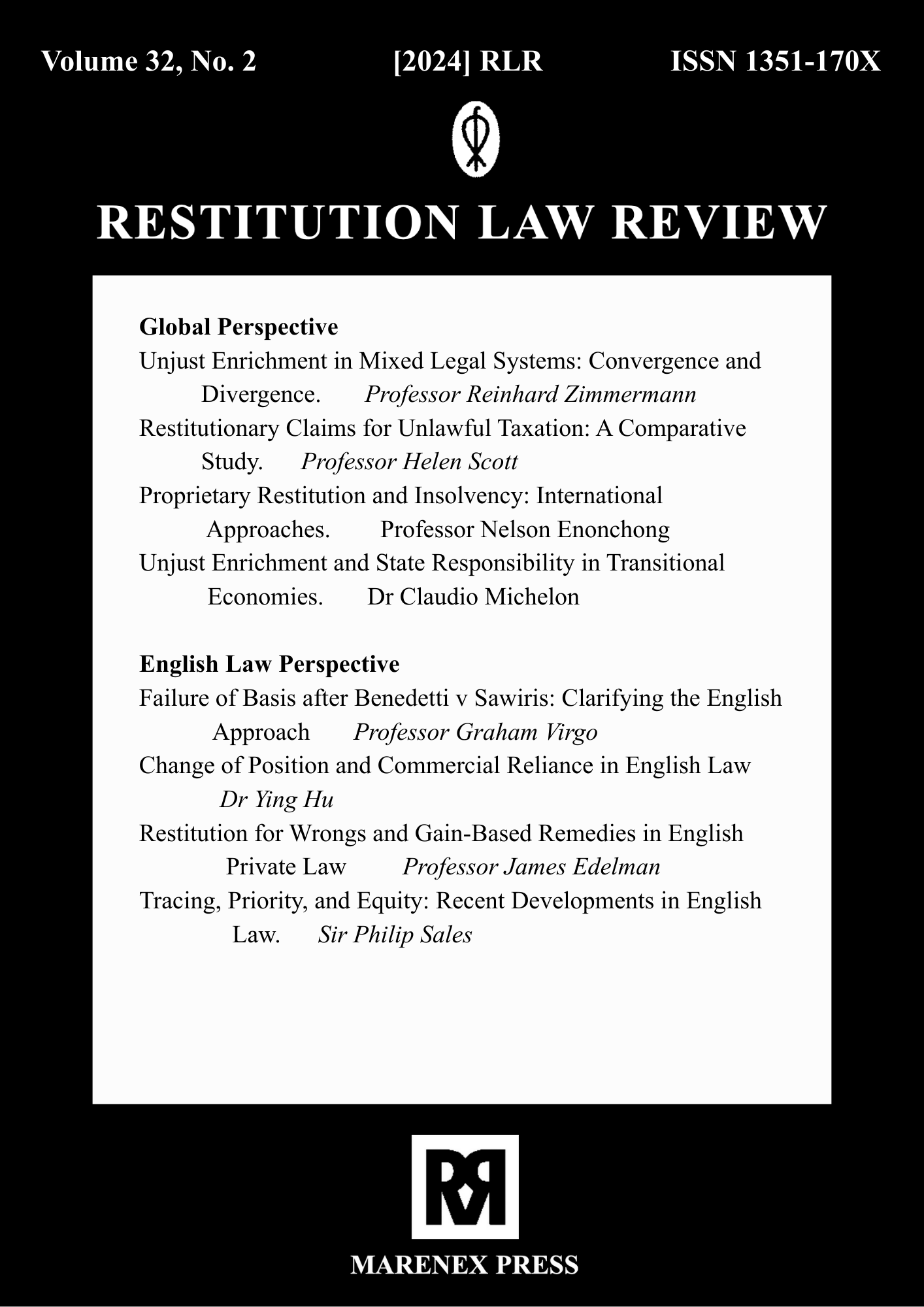
Restitutionary Claims for Unlawful Taxation: A Comparative Study
Abstract
Claims for the restitution of unlawfully levied taxes represent a recurring challenge across legal systems, engaging complex questions of public finance, constitutional principle, and private law doctrine. This article undertakes a comparative examination of restitutionary responses to unlawful taxation in selected common law and civilian jurisdictions. It analyses the doctrinal bases upon which recovery is permitted or restricted, focusing on unjust enrichment, mistake, and public law remedies. Particular attention is given to the role of defences such as limitation, change of position, and fiscal stability, and to the differing weight accorded to governmental reliance interests. The article argues that while courts increasingly acknowledge the corrective justice rationale underpinning restitutionary recovery, they also remain cautious about the systemic consequences of large-scale fiscal restitution. By comparing judicial approaches, the article identifies recurring tensions between legality and financial certainty and evaluates whether existing doctrinal tools adequately mediate these competing concerns. The article concludes by proposing a set of guiding principles for restitutionary recovery in taxation cases that balance individual justice with institutional stability.
Published
Issue
Section
License
Copyright (c) 2025 Restitution Law Review

This work is licensed under a Creative Commons Attribution-NonCommercial 4.0 International License.